

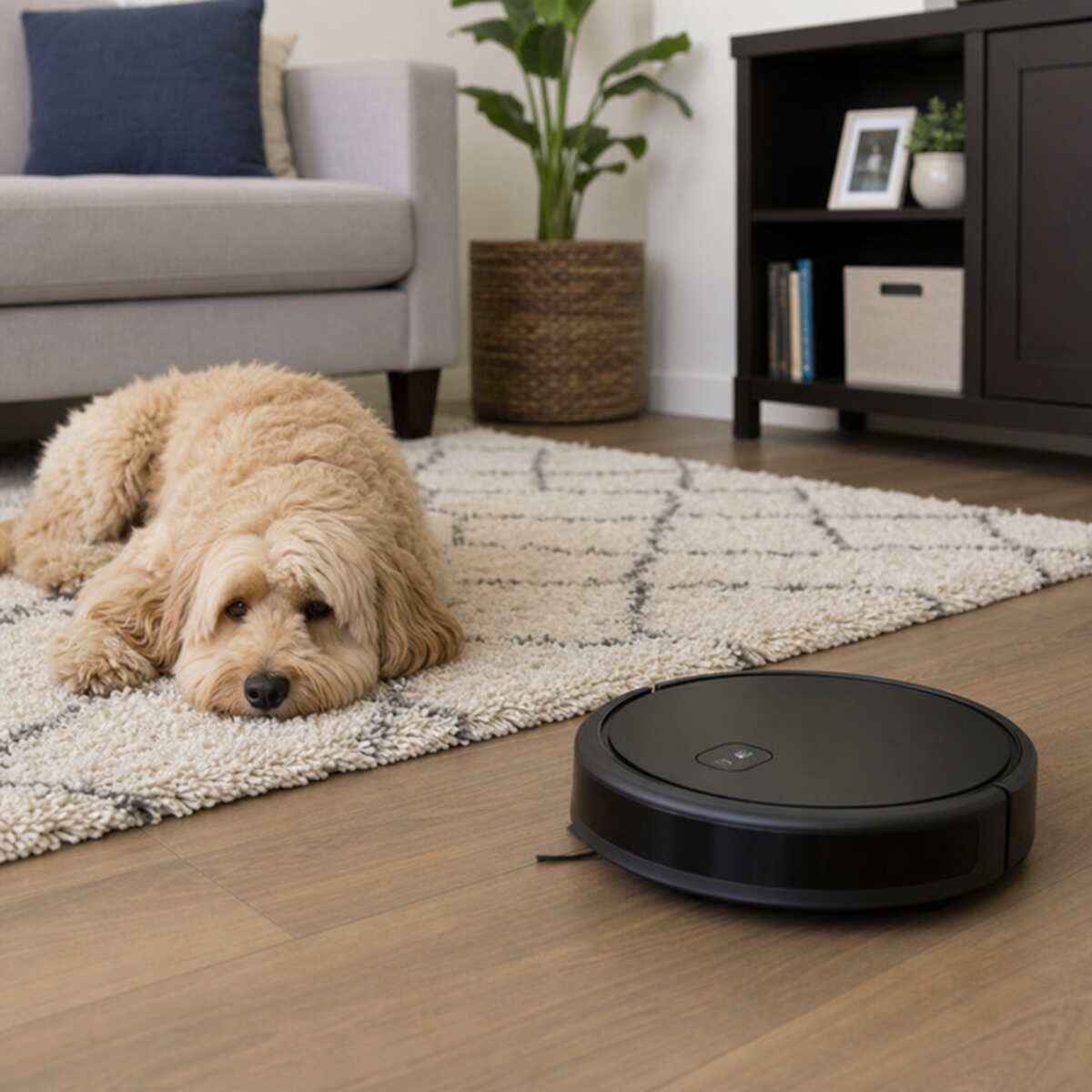
If you share your home with a dog or a cat, you already know the universal truth of pet ownership: the love they bring into your life is immeasurable, but the amount of hair they leave on your floors is entirely quantifiable—and seemingly endless. The actual Interesting Info about Robot Süpürge.
Between the tumbleweeds of golden retriever fur rolling across the hallway, the microscopic dander settling into your rugs, and the muddy paw prints stamped across the kitchen tiles after a rainy walk, keeping your home clean can feel like a full-time job.
Enter the modern marvel of smart home technology: Robot Vacuums.
Over the past decade, these autonomous devices have evolved from novelty gadgets that aimlessly bumped into walls into highly sophisticated, laser-guided cleaning machines. For pet owners, they are no longer just a luxury; they are a fundamental tool for maintaining sanity, hygiene, and a beautiful home.
In this comprehensive, deep-dive guide, we are going to explore everything you need to know about integrating these intelligent devices into a pet-friendly household. From understanding complex navigation software to choosing the best automated floor cleaners for pet hair, this article is designed to be your ultimate resource.
1. The Evolution of Floor Care: Why Traditional Methods Are Falling Behind
For generations, the standard weekend chore involved dragging a heavy appliance out of the closet, unspooling a massive cord, and manually pushing it around every room. When comparing upright canisters to autonomous devices, the differences in modern lifestyle convenience become starkly apparent.
Upright and canister models certainly offer raw, brute-force suction, which is excellent for a deep spring cleaning. However, pet hair doesn’t wait for Sunday morning. Pets shed continuously. Dander accumulates daily. Muddy paws happen on a random Tuesday evening.
Traditional vacuums require your active physical participation, meaning the house only gets cleaned when you have the time and energy to do it. As a result, pet hair accumulates between manual cleaning sessions.
In recent years, the market saw a shift toward cordless vacuums. These stick models offered incredible convenience, allowing users to quickly spot-clean a mess without tethering themselves to a wall outlet. However, even the best cordless stick vacuum still requires you to do the work.
This is where autonomous robot cleaners have completely disrupted the floor care industry. They offer something that traditional and cordless models cannot: passive, continuous maintenance. By running on a daily schedule, they prevent the accumulation of pet hair entirely, keeping your home at a baseline level of cleanliness that requires zero daily effort on your part.
2. The Unique Challenges of Pet Ownership
Before diving into the technology, we must understand the specific enemies we are fighting. Standard dust and dirt are easy to vacuum. Pet-related debris presents a unique set of engineering challenges:
- Shedding and Tangles: Long pet hair has a nasty habit of wrapping tightly around traditional bristle brush rolls, eventually choking the motor and requiring you to cut the hair away with scissors.
- Microscopic Dander: Pets shed skin flakes (dander) and secrete proteins through their saliva and sweat glands. These allergens trigger sneezing, watery eyes, and asthma.
- Litter Tracking: Cats inevitably kick pieces of clay or silica litter out of their boxes. These hard, jagged particles can scatter and even scratch hard floors if dragged by a poorly designed vacuum.
- Mud and Spills: Dogs bring the outdoors inside. Drool, mud, and water bowl spills dry into the floor, requiring active scrubbing, not just suction.
- The “Accident” Factor: Puppies, senior dogs, or pets with upset stomachs occasionally leave solid or liquid waste on the floor. A “dumb” robot vacuum will run directly through it, creating an apocalyptic mess spread across your entire house.
To combat these challenges, you cannot simply buy the cheapest robot on the market. You need a device specifically engineered to handle the chaos of animals.
3. Extracting the Fur: Identifying the Best Automated Floor Cleaners for Pet Hair
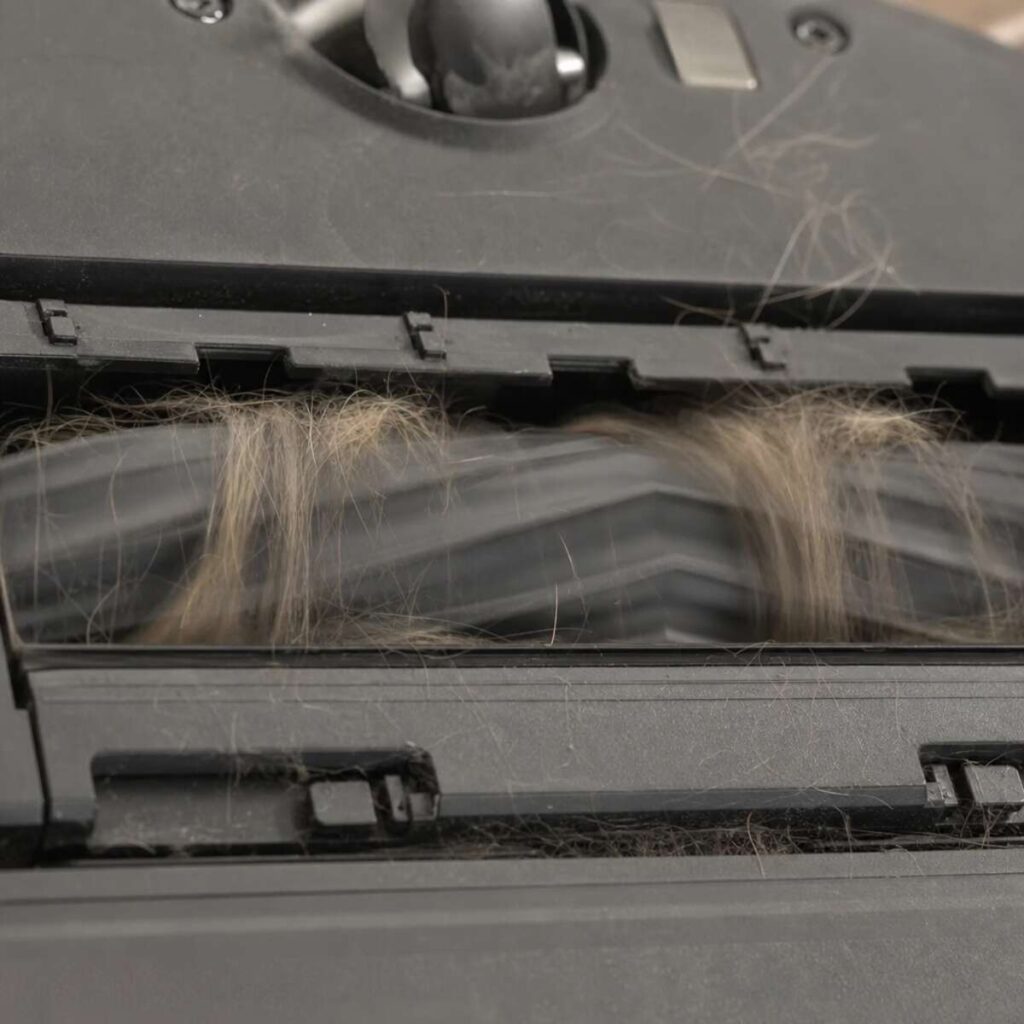
When evaluating the best automated floor cleaners for pet hair, the first thing you must look at is the anatomy of the extraction system. Suction power (measured in Pascals, or Pa) is important, but suction alone will not pull a stubborn terrier hair out of a thick rug. Agitation is key.
The Shift to Dual Rubber Brushes
Older Robot Vacuums utilized bristle brushes, similar to a standard upright vacuum. Bristles are notorious for grabbing long hairs and winding them into tight knots.
Today’s premium models use dual, multi-surface rubber extractors. Instead of brushing the floor, these flexible rubber treads counter-rotate. One agitates the carpet fibers to loosen dirt, while the other pulls the debris into the suction channel. Most importantly, hair tends to slide right off the smooth rubber, significantly reducing tangles.
High-Velocity Suction
Pet hair is incredibly lightweight, but it can weave itself into fabrics. Look for models boasting at least 4,000 to 8,000 Pa of suction. This ensures that once the rubber brushes agitate the hair, the vacuum has the raw aerodynamic power to lift it into the dustbin before it settles back down.
4. Seeing the World: Navigation and Mapping Systems
If a robot cannot efficiently navigate your home, its cleaning performance is irrelevant. Navigation technology is what separates the frustrating, toy-like gadgets from true smart home appliances.
Obstacle Avoidance Technology vs Random Navigation
Early robotic vacuums utilized “bounce” or random navigation. They would drive in a straight line until their mechanical bumper hit a wall or a piece of furniture. Then, they would turn at a random angle and continue.
Obstacle avoidance technology vs random navigation is like comparing a modern smartphone to a rotary dial. Random navigation means the robot might clean the same patch of floor five times while completely missing a corner full of cat hair. It is inefficient, takes far too long, and often results in the robot getting trapped under a couch.
Modern robots are methodical. They move in neat, overlapping rows, ensuring every single square inch of flooring is covered once and only once. They achieve this using advanced spatial awareness technologies.
How Do LiDAR Sensors Work in Smart Sweepers?
You will often see the term “LiDAR” (Light Detection and Ranging) in the specs of high-end models. But how do lidar sensors work in smart sweepers?
LiDAR uses an invisible, rapidly spinning laser mounted in a small turret on top of the vacuum. This laser shoots out beams of light thousands of times per second. When the light hits a wall, a chair leg, or a kitchen island, it bounces back to the sensor.
By calculating the exact time it takes for the light to return, the robot’s internal processor builds a highly accurate, real-time 3D map of the room. It knows exactly where the boundaries are, where obstacles sit, and where it has already cleaned. Because it relies on lasers rather than ambient light, LiDAR works perfectly in pitch-black rooms, meaning your robot can do a midnight sweep of the kitchen while you sleep.
5. The Brains of the Operation: AI and Object Recognition
While LiDAR is incredible for mapping walls and large furniture, it has a blind spot: it sits on top of the robot, meaning it cannot always see small objects lying flat on the floor.
For a household with pets, this is a critical vulnerability. A dropped dog toy, a stray charging cable, or worst of all, solid pet waste, can spell disaster.
Artificial Intelligence Object Recognition Performance
To solve this, manufacturers have integrated front-facing RGB cameras and structured light sensors, powered by complex machine learning algorithms.
When evaluating artificial intelligence object recognition performance, we are looking at how quickly and accurately the robot’s “brain” can identify a hazard. These robots are trained on millions of images of common household clutter and pet waste.
When the camera spots an object, the AI cross-references it with its database in milliseconds. If it identifies a dog toy, it will carefully sweep around it. If it identifies a pet mess, it will enforce a wide avoidance zone, ensuring the brushes never come into contact with the hazard.
For pet owners, AI object recognition is not just a fancy add-on; it is a mandatory feature that protects your home from horrific, cross-contaminated messes.
6. Conquering Different Terrains
A typical modern home features a mix of flooring types: hardwood in the living areas, tile in the kitchen, and plush carpets in the bedrooms. Moving seamlessly between these environments requires dynamic engineering.
Maintaining Suction Power on Thick Carpets
Hard floors require relatively low suction to clean effectively, as debris sits loosely on the surface. Carpets, however, grip onto pet hair and dander tightly.
One of the great features of premium robots is their ability in maintaining suction power on thick carpets through an automated feature often called “Carpet Boost.” When the robot’s ultrasonic sensors detect a transition from hardwood to carpet, the machine instantly ramps up its motor to maximum RPMs. This provides the deep-cleaning muscle needed to pull embedded fur and dander from deep within the carpet fibers. Once the robot returns to the hardwood, it lowers the suction, conserving battery life and reducing noise.
Cleaning Schedule Optimization for Hardwood Floors
Conversely, hard floors have their own requirements. To prevent scratching and to ensure fine dust isn’t just blown around by the exhaust, you want precision.
Cleaning schedule optimization for hardwood floors involves utilizing your robot’s companion app to set customized routines. For instance, you can program the robot to run at a lower, quieter suction speed but with maximum side-brush rotation to sweep pet hair away from baseboards. You can also schedule multiple passes (e.g., a “checkerboard” pattern) specifically in the dining room to catch stray kibble after your dog eats.
7. The Power to Keep Going: Battery and Coverage
Nothing is more frustrating than a smart device that constantly dies before the job is done. When you are relying on a machine to manage daily pet shedding, stamina matters.
Average Battery Runtime for Large Homes
When shopping, you must consider the average battery runtime for large homes. Most entry-level robots feature batteries ranging from 2600mAh to 3200mAh, yielding about 90 to 100 minutes of cleaning on low suction.
For a large home (over 2,000 square feet), or a home with mostly carpet (which drains the battery faster due to the higher suction demand), this is insufficient. You should look for premium models boasting 5200mAh batteries or higher. These can run for up to 180 to 200 minutes on a single charge.
Furthermore, ensure the robot has “Recharge and Resume” capabilities. If the battery runs low during a massive cleaning job, the robot will automatically navigate back to its dock, charge up just enough to finish the remaining square footage, and head exactly back to where it left off.
8. Breathing Easier: Managing Dander and Allergies
For many families, loving a pet comes with the unfortunate side effect of allergies. Pet dander consists of microscopic flecks of skin shed by cats, dogs, rodents, and birds. Because it is so lightweight, dander can remain airborne for hours before settling into your carpets and upholstery.
If your vacuum does not have proper filtration, it will simply suck up these microscopic allergens and immediately exhaust them back into the air you breathe, essentially acting as an allergy-distribution machine.
HEPA Filtration Systems for Allergy Sufferers
This is why HEPA filtration systems for allergy sufferers are non-negotiable. HEPA (High-Efficiency Particulate Air) filters are rigorously tested to capture 99.97% of particles down to 0.3 microns in size.
When a robot vacuum is equipped with a true HEPA filter (and a sealed system so air cannot leak out around the filter), it actively improves your home’s indoor air quality as it cleans. It traps dander, pollen, dust mites, and mold spores inside the dustbin, ensuring that the exhaust air blowing out of the back of the robot is perfectly clean.
Actionable Tip: If you suffer from severe pet allergies, schedule your robot to vacuum the bedrooms every single day while you are at work. By the time you return to sleep, the ambient dander levels will be significantly reduced.
9. The Ultimate Convenience: The Docking Station
If there is one technological leap that has defined the modern era of robotic vacuums, it is the evolution of the base station.
Self-Emptying Base Station Benefits
In the past, the major drawback of a robot vacuum was its tiny onboard dustbin. Because the robots are so small, their internal bins hold roughly 300 to 500 milliliters of dirt. In a house with a heavily shedding Golden Retriever, that bin will fill up in 15 minutes. This meant you had to follow the robot around, constantly pausing it to empty the bin into the trash.
The introduction of auto-empty docks changed everything.
The self-emptying base station benefits are truly life-changing for a pet owner. When the robot finishes its cleaning run (or when its internal bin gets full mid-run), it drives back to its dock. The dock contains a massive, powerful secondary vacuum motor that sucks all the pet hair, dirt, and dander out of the robot and deposits it into a large, enclosed, disposable bag.
These base station bags typically hold 30 to 60 days’ worth of debris. This means you can completely ignore your floor cleaning chores for weeks at a time. Furthermore, because the debris is sealed inside a bag, allergy sufferers do not have to endure the plume of dust that usually accompanies emptying a bagless vacuum over a trash can.
10. Tackling Mud and Drool: The Hybrid Revolution
Pet messes are not limited to dry fur and kibble. Dogs track mud in from the yard, cats knock over water glasses, and messy eaters leave saliva and food residue around their bowls.
Automated Mopping and Sweeping Hybrid Review
To handle these multifaceted messes, manufacturers have introduced 2-in-1 combo units. An automated mopping and sweeping hybrid review reveals that these devices have come a long way from their early iterations, which simply dragged a wet rag across the floor.
Today’s high-end hybrids feature active mopping technology.
- Sonic Scrubbing: Some models use a flat mop pad that vibrates up to 3,000 times per minute, mimicking the fast scrubbing action of a human hand to break down dried-on muddy paw prints.
- Dual Spinning Mops: Other models feature two circular mop pads that apply downward pressure and spin rapidly, highly effective for buffering out tough stains.
The smartest of these hybrids utilize auto-mop lifting. When the robot approaches a carpet or a rug, it physically lifts the wet mop pads up into its chassis, ensuring your rugs stay dry while it vacuums, then lowers them again when it returns to hard floors.
The most advanced base stations on the market today don’t just empty the vacuum’s dustbin; they also wash and dry the robot’s dirty mop pads using hot water and hot air, and refill the robot’s onboard water tank. It is true, hands-free floor maintenance.
11. Customizing the Clean: Software and Mapping Capabilities
The physical hardware of a robot is only half the story; the companion smartphone app dictates how you interact with the machine.
Multi-Floor Mapping Software Capabilities
If you live in a multi-story home, you might wonder if you need to buy a separate vacuum for each floor. Fortunately, advanced multi-floor mapping software capabilities allow a single robot to learn and remember multiple different floor plans.
You can pick the robot up, carry it upstairs, and press start. The robot will spin around, use its LiDAR to recognize its surroundings, load the “Upstairs” map, and begin cleaning.
Within these maps, the software allows for incredible customization:
- No-Go Zones: Draw a red box around your pet’s food and water bowls so the robot never bumps into them and spills water.
- Targeted Room Cleaning: Select “Kitchen” and “Living Room” to clean only the high-traffic areas where the dog hangs out, skipping the unused guest rooms.
- Custom Cleaning Preferences: Set the robot to do a deep, double-pass vacuum with high suction in the carpeted den, but a quiet, single-pass sweep in the hallway.
12. Bringing It All Together: Smart Home Integration
To truly make floor cleaning an invisible chore, you want your robot to communicate with the rest of your home.
Smart Home Ecosystem Integration Guide
Integrating your vacuum with Amazon Alexa, Google Assistant, or Apple HomeKit elevates the experience from app-controlled to voice-controlled and fully automated.
Here is a quick smart home ecosystem integration guide for pet owners:
- Voice Commands: Once linked to your smart speaker, you can say, “Alexa, tell the vacuum to clean under the dining table” immediately after your dog makes a mess eating a messy treat.
- Geofencing: By integrating the robot with your phone’s location services (often via applets like IFTTT), you can program the robot to automatically begin cleaning the moment you and your phone leave the house. Your pets won’t be bothered by the noise while you are home, and you will always return to a clean house.
- Routine Stacking: You can tie the vacuum to other daily habits. Set a “Goodnight” routine where turning off the living room smart lights automatically triggers the robot to sweep the main floor while you sleep.
13. Protecting Your Investment: Maintenance and Upkeep
While robot vacuums automate the cleaning of your floors, the robots themselves still require periodic maintenance to continue operating at peak efficiency. Pet hair, in particular, accelerates the wear and tear on consumable parts.
How to Replace Side Brushes and Filters
Understanding how to replace side brushes and filters, as well as keeping the sensors clean, will extend the life of your machine by years.
Weekly Maintenance for Pet Owners:
- Sensor Wipe-Down: Use a clean, dry microfiber cloth to gently wipe the cliff sensors (located on the bottom of the robot) and the camera/LiDAR sensors. If these get covered in dusty pet dander, the robot will navigate poorly and may fall down stairs.
- Check the Brush Roll: Even with tangle-free rubber brushes, long pet hair can sometimes wrap around the axles at the very ends of the brush roll. Pop the brushes out and pull away any hair accumulated near the bearings.
- Clean the Caster Wheel: The small directional wheel at the front of the vacuum can become jammed with dog hair. Pop it out, remove any debris, and click it back in.
Monthly to Bi-Monthly Maintenance:
- Filter Replacement: HEPA filters become clogged with microscopic dander over time, reducing suction power. Tap them gently against the inside of a trash can weekly, and fully replace them every 2 to 3 months.
- Replacing Side Brushes: The spinning side brushes that pull debris out of corners will eventually become frayed or bent. Most are held in place by a single Philips head screw or a simple snap-on mechanism. Remove the old one, click the new one into place, and you will immediately notice an improvement in edge-cleaning performance.
14. Financial Considerations: A Worthwhile Investment?
With high-end, self-emptying, AI-navigating models costing anywhere from $500 to over $1,200, it is natural to ask: are cordless robotic cleaners worth the money?
When evaluating the cost, you must factor in the “Return on Time.”
Imagine you spend just 15 minutes a day sweeping up pet hair and vacuuming high-traffic areas. That equals 1 hour and 45 minutes a week, or roughly 90 hours a year.
By purchasing a high-quality automated cleaner, you are effectively buying back two and a half full work weeks of your life every single year. You are reclaiming your weekends.
Furthermore, consistent daily vacuuming drastically prolongs the life of your expensive carpets and rugs. Dirt and hard debris act like microscopic sandpaper against carpet fibers when walked upon. By removing this debris daily, a robot vacuum prevents the premature matting and wearing of your flooring. In the long run, the preservation of your home’s interior can offset the initial cost of the device.
15. The “Pet Acclimation” Guide: Introducing the Robot to Your Furry Friends
We cannot discuss robot vacuums for pet owners without addressing the elephant (or rather, the terrified cat) in the room.
Pets react differently to robotic vacuums. Some dogs will sleep right through a robot bumping into their paws. Other dogs view the robot as an invading predator and will attempt to attack it. Cats often view them with deep suspicion or, famously, decide they make excellent transportation devices.
To ensure harmony in your household, follow these steps to introduce the new machine:
- The Unboxing Phase: Before you ever turn the machine on, take it out of the box and place it in the center of the living room. Let your pets approach it, sniff it, and investigate it on their own terms. Leave it there for a full day.
- The Feeding Association: Place a high-value treat or a small amount of their favorite food near (but not on) the robot while it is turned off. You want them to associate the physical presence of the machine with positive experiences.
- The First Run: For the first few runs, do not schedule the robot to clean while you are not home. You need to supervise. Turn the robot on its lowest, quietest suction setting.
- Positive Reinforcement: As the robot moves around, act completely calm and normal. Do not make a big deal out of it. If your dog or cat remains calm, reward them with praise and treats.
- Redirecting Aggression: If your dog tries to bite the side brushes or bark at the machine, firmly redirect their attention with a toy or a command. Do not let them “play” with the robot, as this will lead to scratched hardware or a broken vacuum down the line.
Over time, 99% of pets will accept the robot as just another boring appliance in the house, much like the refrigerator or the washing machine.
16. Frequently Asked Questions (FAQs) for Pet Owners
To round out this comprehensive guide, let’s address some of the most specific, highly-searched questions pet owners have when transitioning to automated floor care.
Q: Can a robot vacuum completely replace my traditional vacuum?
A: For daily maintenance, absolutely. A premium robot will handle 95% of your floor care needs. However, you will still likely need a traditional vacuum or a cordless stick vacuum for stairs, upholstery, car interiors, and deep spring cleaning of very thick pile carpets. Think of the robot as your daily workhorse, and the traditional vacuum as your occasional detailing tool.
Q: What happens if my pet throws up while I am at work and the robot is scheduled to run?
A: This is the exact scenario where artificial intelligence object recognition performance becomes critical. If you buy a model with a front-facing camera and AI obstacle avoidance, it will “see” the mess, recognize it as a hazard, and clean around it. If you buy a cheaper model without a camera, it will run over the mess and smear it across your home. If your pets are prone to accidents, you must invest in a camera-equipped model.
Q: Do robot vacuums work on very dark or black rugs?
A: Historically, robot vacuums struggled with dark rugs because their cliff sensors (which prevent them from falling down stairs) interpreted the dark color as a drop-off, causing the robot to stop and error out. Newer, premium models use advanced dual-sensor technology that differentiates between a color change and an actual physical drop, allowing them to clean dark geometric rugs without issue.
Q: How noisy are they? Will they scare my anxious rescue dog?
A: Modern robots are remarkably quiet, especially compared to the screaming jet engines of traditional upright vacuums. On standard or quiet mode, most robots operate around 55 to 60 decibels—roughly the volume of a normal conversation or a quiet dishwasher. The loudest part of the process is the self-emptying base station, which sounds like a standard vacuum for about 10 seconds. You can easily schedule the base station not to empty during certain “Do Not Disturb” hours to keep your anxious pets calm.
Q: My dog sheds an unbelievable amount of long, white hair. Will the auto-empty base really handle it, or will it clog?
A: High-end self-emptying stations are designed specifically with massive air pathways to prevent clogging. The vacuum motor in the dock is incredibly powerful. However, if your home has not been vacuumed in weeks and you run the robot for the first time, it might pick up so much hair that it clogs the robot’s internal bin before it can even make it to the dock. Tip: Do a thorough manual vacuuming of your house before setting up your robot. The robot’s job is maintenance. If it cleans daily from a baseline of clean, the hair will never reach a volume capable of clogging the dock.
17. The Final Verdict: Transforming Your Home Environment
Living with pets means living with messes, but it no longer means spending all your free time cleaning up after them. The technological leaps in the floor care industry have shifted robotic vacuums from niche luxury gadgets to essential household appliances.
By understanding the intricacies of the technology—knowing how do lidar sensors work in smart sweepers, recognizing the value of self-emptying base station benefits, and prioritizing HEPA filtration systems for allergy sufferers—you can make an informed decision that will genuinely improve your quality of life.
You no longer have to compromise between having a beautifully clean house and enjoying the companionship of your furry friends. With the right automated cleaner, you can confidently let your dog roll around in the yard, let your cat explore the house, and know that behind the scenes, a quiet, intelligent machine is working tirelessly to keep your home pristine.
So, put the traditional upright back in the closet. Reclaim your weekends, breathe easier, and spend more time playing with your pets, and less time cleaning up their hair.
