

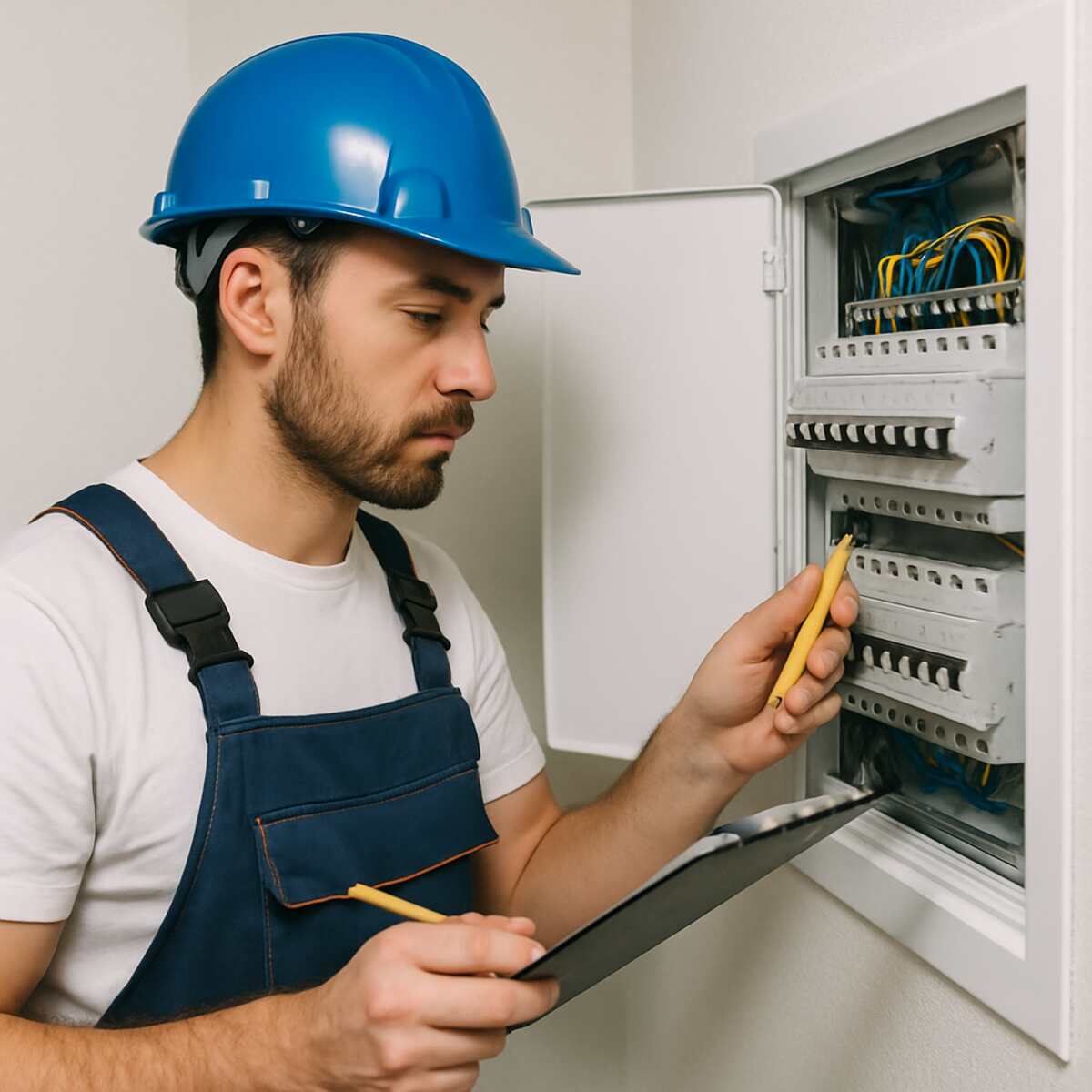
Think of your home as a living, breathing organism. If the wiring is the nervous system and the appliances are the organs, the electrical panel is the beating heart. It receives power from the utility grid and distributes it safely and efficiently to every outlet, light fixture, and appliance in your house. Find the best electrician Highlands Ranch CO.
But what happens when that heart is forced to pump harder than it was ever designed to?
With the rapid adoption of electric vehicles (EVs), heat pumps, induction stoves, and smart home technology, modern households are consuming electricity at unprecedented rates. An older breaker box simply cannot keep up with this demand. If you are living in a home built more than two decades ago, an electrical panel upgrade isn’t just a luxury—it is a critical investment in your home’s safety, functionality, and future.
In this comprehensive guide, we will explore everything you need to know about an electrical panel upgrade. We will break down the costs, decode the safety standards, and walk you through the essential considerations to ensure your home is powered safely for decades to come.
1. What is an Electrical Panel and Why Does it Matter?
Before diving into the complexities of an upgrade, it is essential to understand what an electrical panel actually does. Known interchangeably as a breaker box, distribution board, or load center, the electrical panel serves as the central hub for your home’s electrical system.
When electricity enters your home from the utility company, it passes through the meter and into this panel. From there, the panel splits the main electrical current into smaller, manageable subsidiary circuits. Each of these circuits is protected by a circuit breaker—a safety device designed to automatically cut off the power if the current exceeds safe levels, thereby preventing overheating and electrical fires.
The Anatomy of a Breaker Box
To demystify the box on your basement or garage wall, here are its primary components:
- Main Breaker: This is the large switch, usually located at the top or bottom of the panel, that controls the power to the entire house. It dictates the total capacity of your electrical system.
- Bus Bars: Hidden behind the breakers, these metallic strips carry the live current from the main breaker to the individual circuit breakers.
- Circuit Breakers: These are the individual switches you interact with. They protect specific zones or appliances in your home.
- Neutral and Ground Bus Bars: These ensure that unbalanced currents have a safe return path and that stray electricity is directed safely into the earth.
When you upgrade electrical panel components, you are essentially replacing this entire nerve center to accommodate a larger influx of power and to utilize modern, highly sensitive safety switches.
2. The Warning Signs: When is it Time for an Electrical Panel Upgrade?
Many homeowners take a “set it and forget it” approach to their electrical systems. However, panels have a lifespan, typically ranging from 25 to 40 years. Even if your panel hasn’t reached its expiration date, modern electrical demands might be pushing it past its limits.
Here are the most common signs of an overloaded electrical system:
Flickering or Dimming Lights
If your lights dim when the refrigerator kicks on or when you power up the microwave, your system is struggling to distribute adequate power. This voltage drop is a clear indicator that your panel lacks the capacity to handle simultaneous loads.
Frequent Breaker Trips
Circuit breakers are designed to trip when a circuit is overloaded, protecting your wires from melting. However, frequent circuit breaker tripping causes usually point to one of two things: either you have a faulty appliance short-circuiting the system, or your panel is simply undersized for your daily usage. If resetting the breaker has become a weekly chore, it’s time to call a professional.
Warm or Scorch-Marked Panels
Place the back of your hand against the metal door of your electrical panel. It should feel room temperature. If it is warm to the touch, or if you notice any black scorch marks, rust, or a faint smell of burning plastic, turn off your main power immediately and call an electrician. This is an imminent fire hazard.
The Need for Power Strips and Extension Cords
If your home lacks sufficient outlets, forcing you to rely on a spiderweb of power strips and extension cords, your electrical infrastructure is outdated. An electrical panel replacement usually goes hand-in-hand with adding new circuits and outlets to safely accommodate your devices.
3. Outdated Technology: The Danger in Your Walls
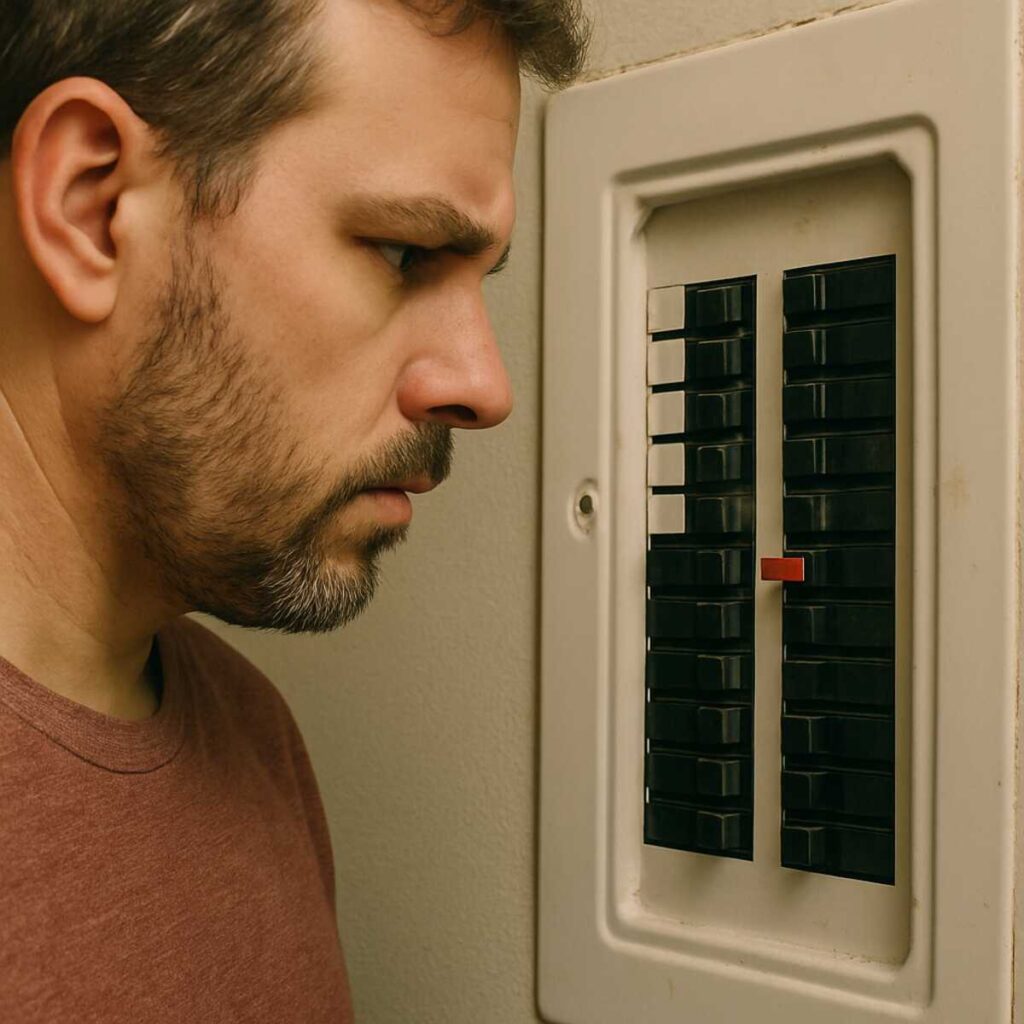
Sometimes, the need for an upgrade isn’t driven by capacity, but by sheer obsolescence. Electrical safety standards have evolved drastically over the last few decades. If your home features any of the following older technologies, a replacement should be your top priority.
The Era of Fuses
Before circuit breakers became the norm in the 1960s, homes were equipped with fuse boxes. Fuses contain a small filament that literally melts (or “blows”) when overloaded, breaking the circuit.
While fuses themselves are actually very effective at preventing overcurrents, they come with significant drawbacks. They must be physically replaced every time they blow, which is highly inconvenient. Worse, frustrated homeowners in the past would sometimes replace a blown 15-amp fuse with a 30-amp fuse to stop it from blowing so often. This allowed massive amounts of current to flow through wires only rated for 15 amps, directly leading to house fires.
A fuse box to circuit breaker conversion is practically mandatory today, not just for safety, but because most home insurance companies will refuse to write a policy for a home that still relies on fuses.
Hazardous Legacy Panels
Even if your home has circuit breakers, the brand of the panel matters. Due to manufacturing defects and design flaws, several brands installed between the 1950s and 1980s have lost their safety certifications.
- Federal Pacific Electric (FPE): If your home was built during this era, it may be harboring hazardous Federal Pacific Electric panels, specifically the “Stab-Lok” models. Investigations have shown that these breakers have a shockingly high failure rate—failing to trip during an overload up to 25% of the time. This defect has been linked to thousands of electrical fires.
- Zinsco / GTE Sylvania: These panels feature aluminum bus bars that are highly prone to oxidation. Over time, the breakers can literally melt and fuse to the bus bar, making it impossible for them to trip during a power surge.
- Challenger: Installed heavily in the 1980s and 1990s, certain Challenger breakers were found to overheat under normal conditions, leading to massive recalls.
If you open your panel door and see any of these names printed on the label, consult a licensed electrician immediately for a replacement quote.
4. Capacity Matters: 100 Amp vs 200 Amp Service (and Beyond)
When discussing an upgrade, the conversation inevitably turns to “amperage.” Amps measure the volume of electricity flowing into your home. The total amperage of your main breaker determines how many electrical devices you can run simultaneously.
For decades, a 60-amp or 100-amp panel was perfectly adequate. Today, it’s a different story. The great debate of 100 amp vs 200 amp service is usually settled quickly once a homeowner calculates their modern electrical load.
The 100-Amp Panel
A 100-amp panel is the bare minimum required by modern electrical codes. It is generally sufficient for smaller homes (under 1,500 square feet) that utilize gas for their heavy-duty appliances—such as gas furnaces, gas water heaters, and gas stoves. However, if you plan to add a hot tub, a central air conditioning unit, or an electric vehicle charger to a 100-amp system, you will almost certainly max out your capacity.
The 200-Amp Panel
Today, the 200-amp panel is the industry standard for new construction and panel upgrades. It provides double the capacity, allowing a modern family to simultaneously run the HVAC system, wash clothes, bake in an electric oven, and charge an EV without a second thought. For most homeowners, upgrading to a 200-amp panel provides absolute peace of mind and “future-proofs” the property for decades.
Heavy Duty: 300 to 400-Amp Panels
For sprawling luxury homes, properties with extensive electrical outbuildings, or homes transitioning to fully electric (electric heating, multiple EV chargers, electric water heaters, and induction ranges), a 200-amp service might still fall short. In these cases, electricians will install a 320-amp or 400-amp service, which typically involves installing two separate 200-amp panels side-by-side.
5. Understanding the Cost: How Much Does it Cost to Replace a Breaker Box?
The most common question homeowners ask is, “how much does it cost to replace a breaker box?”
Because every home is uniquely wired, there is no one-size-fits-all price. On average, homeowners in the United States can expect to pay anywhere from $1,500 to $4,500 for a standard panel upgrade. However, complex projects can easily push the total closer to $8,000.
To understand where your money is going, we need to break down the costs into materials, labor, and ancillary expenses.
1. Material Costs
The physical panel and the breakers make up a significant portion of the cost.
- The Panel (Load Center): The empty metal box itself costs between $150 and $400, depending on the brand (e.g., Square D, Siemens, Eaton) and the number of breaker spaces it contains.
- Circuit Breakers: Standard breakers are relatively cheap ($5 to $15 each). However, modern safety codes require advanced breakers (AFCI and GFCI), which cost between $40 and $70 each. A fully populated panel will require hundreds of dollars in breakers alone.
- Wiring and Conduit: Upgrading your capacity often means replacing the thick cables that connect your panel to the utility line, which adds to the material cost.
2. Labor Costs
Electrical work is not a DIY project; it requires years of training and strict adherence to safety codes. Therefore, labor will constitute the largest chunk of your bill.
The licensed electrician labor rates per hour generally range from $75 to $150, depending on your geographic location and the master electrician’s experience. A standard panel swap usually takes one electrician (often with an apprentice) between 6 to 10 hours to complete.
3. Ancillary and Hidden Costs
When budgeting for your upgrade, you must also factor in costs that aren’t immediately obvious:
- Relocation: If your current panel is in a bathroom, a cramped closet, or another location that violates modern clearance codes (which require a dedicated space 30 inches wide, 36 inches deep, and 78 inches high), the electrician must move it. Rerouting all the wires in your house to a new location can add $1,000 to $3,000 to the bill.
- Drywall Repair: Electricians often have to cut into your walls to run new wires or install the larger panel box. Most electricians do not patch and paint drywall, meaning you will need to hire a separate contractor or do it yourself.
- Utility Fees: Sometimes, your local power company will charge a fee to disconnect and reconnect your power at the utility pole during the upgrade process.
6. The Anatomy of a Replacement: What Actually Gets Replaced?
A true capacity upgrade rarely involves just swapping the metal box on your basement wall. To pull more power from the grid, the entire pathway from the utility pole to your breakers must be widened.
The Service Entrance
The power company’s responsibility usually ends at the connection point outside your house (the weatherhead). From there, the homeowner is responsible for the residential electrical service entrance cable.
If you are upgrading from 100 amps to 200 amps, the existing entrance cable will be too thin to safely carry the increased current. Your electrician will have to install a thicker, heavier gauge cable down the side of your house. Additionally, the meter base (the metal box that holds the utility company’s spinning meter) will also need to be replaced with a heavier-duty model rated for 200 amps.
Grounding and Bonding
Older homes often rely on metal cold-water pipes for their electrical ground. Modern codes require a much more robust grounding system to protect against lightning strikes and power surges. Your electrician will likely need to drive two 8-foot copper grounding rods into the earth outside your home and run a thick copper bonding wire directly from the new panel to these rods.
Sizing the Breakers
A crucial part of the installation is choosing the right circuit breaker capacity for each wire in your home. An electrician cannot simply put a 20-amp breaker on a wire designed for 15 amps; doing so would allow the wire to overheat before the breaker trips. The electrician will meticulously map your existing wiring gauge to ensure every circuit is protected by an appropriately sized breaker.
7. Safety Upgrades and Code Compliance
Electrical installations are governed by strict rules designed to prevent fires and fatal shocks. In the United States, this is dictated by the NEC. Ensuring your new panel meets current national electrical code safety standards is one of the primary benefits of an upgrade.
The Rise of AFCI Protection
Arc-Fault Circuit Interrupters (AFCIs) are one of the most important safety innovations of the last thirty years. An arc fault occurs when a wire is nicked, pinched, or damaged, causing electricity to “jump” or arc through the air. This arcing generates immense heat (up to 10,000 degrees Fahrenheit) and is a leading cause of electrical fires behind drywall.
Standard breakers cannot detect arc faults. AFCI breakers, however, contain tiny computers that monitor the electrical waveform. If they detect the erratic signature of an arc, they trip the circuit instantly. The NEC now requires AFCI protection for nearly all living spaces in a home (bedrooms, living rooms, hallways).
GFCI Protection
While AFCIs prevent fires, GFCIs prevent electrocution. Ground fault circuit interrupter installation is mandatory for areas where electricity and water might mix—such as kitchens, bathrooms, garages, and outdoor outlets.
A GFCI monitors the amount of current going out to a device and the amount returning. If even a tiny fraction of a milliamp goes missing (which implies it is leaking into the ground, perhaps through a person), the GFCI cuts the power in milliseconds. While GFCIs are often installed as the outlets themselves (the ones with the “Test” and “Reset” buttons), your electrician may choose to install GFCI breakers directly in the new panel to protect the entire circuit at the source.
8. Heavy Hitters: Dedicated Circuits for High-Voltage Appliances
One of the main catalysts for upgrading a panel is the acquisition of new, power-hungry technology. Modern codes require dedicated circuits for high-voltage appliances. A dedicated circuit is exactly what it sounds like: a breaker and wire that serves one single appliance, ensuring it has uninterrupted access to the power it needs without overloading a shared line.
When planning your electrical panel upgrade, consider whether you need to add dedicated circuits for:
- Electric Vehicle (EV) Chargers: A Level 2 EV charger requires a 240-volt dedicated circuit, typically ranging from 40 to 60 amps. This single device pulls as much continuous power as a small house, making a panel upgrade almost mandatory for new EV owners.
- HVAC Systems: Central air conditioners and modern electric heat pumps require significant startup wattage and must be on their own 240-volt circuits.
- Induction Cooktops and Electric Ovens: Moving away from gas ranges requires a dedicated 40 or 50-amp circuit to power the high-draw heating elements of an induction stove.
- Hot Tubs and Spas: Water heaters and jet pumps draw massive amounts of power. Because of the water risk, these also require specialized GFCI-protected dedicated circuits.
- Heavy Workshop Machinery: If you are a hobbyist using table saws, air compressors, or welding equipment in the garage, dedicated 20-amp or higher circuits will prevent your house lights from dimming every time you start a tool.
By upgrading your panel capacity and adding these dedicated circuits simultaneously, you save on labor costs compared to hiring an electrician to add them piecemeal later on.
9. The Future is Here: Smart Home Energy Management Panels
For tech-savvy homeowners, the traditional breaker box is undergoing a revolutionary transformation. If you are going through the trouble and expense of an upgrade, you may want to consider a smart home energy management panel.
Companies like Span, Leviton, and Schneider Electric have reimagined the electrical panel for the 21st century. Instead of simple mechanical switches, these smart panels are connected to your home’s Wi-Fi and offer unprecedented control and visibility over your energy consumption via a smartphone app.
Features of a Smart Panel
- Circuit-Level Monitoring: Wondering why your electric bill is so high? A smart panel tells you exactly how much power your AC, your refrigerator, and your teenager’s gaming computer are using in real-time.
- Remote Control: Did you leave the iron on before leaving for vacation? With a smart panel, you can turn off individual circuits remotely from your phone.
- Dynamic Load Shedding: This is crucial for homes with battery backups or solar panels. If the grid goes down, the smart panel can automatically cut power to non-essential circuits (like the pool pump or the guest room) and direct all battery power to essential circuits (like the refrigerator and medical equipment).
- Virtual Capacity Upgrades: In some cases, a smart panel can seamlessly manage the load of a 200-amp home on a 100-amp physical service by intelligently pausing the EV charger when the electric oven is turned on. This can save you the massive cost of having the utility company run new wires to your house.
While a smart panel will cost significantly more upfront (often $3,000 to $6,000 for the unit alone), the energy savings, solar integration, and ultimate convenience make it an increasingly popular choice for modern home renovations.
10. The Legal Side: Do I Need a Permit for Electrical Work?
A common pitfall for homeowners trying to save money is hiring an unlicensed handyman or attempting a “cash under the table” panel swap without involving the local building department.
If you are wondering, “do I need a permit for electrical work?” when replacing a panel, the answer is an unequivocal and absolute YES.
Replacing an electrical panel is one of the most significant structural modifications you can make to a home. It involves disconnecting the main utility feed and rewiring the heart of the house. Here is why skipping the permit is a disastrous idea:
- Safety Inspections: When a permit is pulled, a municipal electrical inspector is required to visit your home after the work is done. They check the electrician’s work to ensure everything meets the National Electrical Code. This unbiased third-party review is your guarantee that the job was done safely and your house won’t burn down.
- Utility Company Requirements: In almost all jurisdictions, the local utility company will refuse to reconnect the power from the pole to your new panel until they receive official clearance from the city inspector. No permit means no power.
- Insurance Voidance: If an unpermitted, improperly installed electrical panel causes a fire, your homeowner’s insurance company has the legal right to deny your claim entirely, leaving you financially ruined.
- Resale Complications: When you eventually sell your home, the buyer’s inspector will easily identify a new panel. If the local permit office has no record of the installation, you will be forced to retroactively permit the work (which includes paying fines and tearing open walls for inspection) or lose the sale.
Always ensure your electrical contractor includes the cost of pulling permits in their initial quote, and never let them convince you to skip this vital step.
11. Return on Investment: Increased Home Value With Modern Wiring
Upgrading your electrical panel is an invisible renovation. Unlike a sparkling new kitchen remodel or a bathroom addition, you can’t show off your new breaker box to guests. Because of this, homeowners sometimes balk at the cost.
However, looking at this project as a pure expense is a mistake. There is a tangible return on investment, primarily seen through increased home value with modern wiring and infrastructure.
Boosting Buyer Confidence
When potential buyers view a home, a 200-amp modern electrical panel is a massive selling point. It tells the buyer that the home’s “bones” are healthy. Conversely, if a home inspector flags an outdated 100-amp panel, a fuse box, or a hazardous FPE panel, buyers will immediately demand a price reduction—often asking for double the actual cost of the upgrade to compensate for the “hassle.” By upgrading proactively, you preserve your asking price.
Lower Insurance Premiums
Many insurance providers view older electrical systems as high-risk liabilities. If you are upgrading from a fuse box or removing a recalled panel brand, notify your insurance agent. Documenting this safety upgrade can often result in a reduction of your annual homeowner’s insurance premium.
Enabling Further Upgrades
An upgraded panel is the gateway to other high-ROI home improvements. You cannot install central air conditioning, add a rentable accessory dwelling unit (ADU), or transition to eco-friendly solar power without a robust electrical foundation. The panel upgrade paves the way for all future home modernization.
12. Step-by-Step Guide: What to Expect on Installation Day
If you have decided to move forward with an electrical panel replacement, knowing what to expect on installation day can alleviate a lot of anxiety. Here is the typical timeline of events:
Phase 1: Preparation and Disconnection
The day usually starts early. The electrician will arrive, review the game plan, and prepare the workspace. Shortly after, the utility company (or the electrician, depending on local laws) will arrive to cut the power to your home directly from the street or the meter. Your house will be completely without power for 4 to 8 hours.
Pro Tip: Keep your refrigerator and freezer doors shut tightly to preserve your food. Charge your phones and laptops the night before, and have flashlights ready if the work is happening in a dark basement.
Phase 2: Demolition and Replacement
With the power safely dead, the electrician will remove the old panel, carefully pulling the existing wires out of the way. They will install the new, larger metal enclosure, mounting it securely to the studs.
Next, they will install the new service entrance cable and meter base on the outside of the home, pulling the heavy-duty utility wires into the new main breaker.
Phase 3: Rewiring and Grounding
This is the most time-consuming part of the day. The electrician will strip, organize, and attach every single existing circuit wire into the new breakers inside the panel. They will also run the new thick copper wire outside to the new grounding rods.
Phase 4: Inspection and Reconnection
Once the wiring is complete, the city or county electrical inspector will arrive. They will verify wire gauges, check the grounding, and ensure the panel is bonded correctly. Once the inspector passes the work and slaps a green approval sticker on the box, the utility company is given the green light to reconnect your home to the grid.
Phase 5: Mapping the Circuits
Before the electrician leaves, they should turn on the main breaker and test every circuit in the house. Finally, they must provide a thoroughly labeled panel directory on the inside of the panel door, clearly identifying which breaker controls the “Kitchen Outlets,” “Master Bedroom,” or “Water Heater.”
Conclusion: Empowering Your Home for the Future
The electrical demands of the average household have shifted dramatically over the last few decades, transforming electricity from a simple utility into the driving force behind modern, eco-friendly, and tech-driven living.
While an electrical panel upgrade requires a significant upfront investment of both time and money, the benefits are undeniable. By moving from a constrained 100-amp system to a robust 200-amp service, eliminating hazardous legacy panels, and embracing modern safety codes, you are doing much more than just keeping the lights on. You are protecting your family from the silent threat of electrical fires, preparing your home for the next generation of high-voltage appliances and electric vehicles, and securing the long-term value of your property.
Don’t wait until you smell burning plastic or find yourself constantly resetting tripped breakers in the dark. Assess your electrical needs, consult with a licensed professional, and give your home the power it truly deserves.
